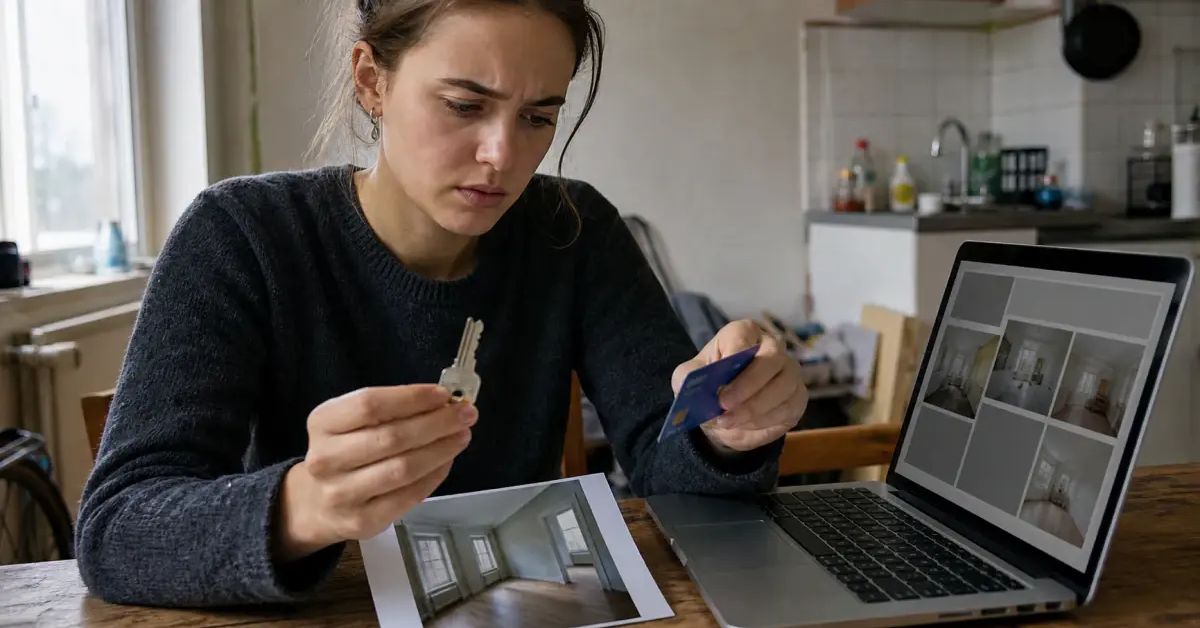
Booking a vacation rental can be an excellent way to find more space, privacy, and flexibility than a traditional hotel. But before sending money, it is important to know how to verify vacation rentals before paying. Fake listings, misleading property descriptions, stolen photographs, impersonated hosts, phishing websites, and unusual payment requests can turn an exciting trip into an expensive problem.
Vacation rental scams often work because the listing looks convincing. The property may have attractive photographs, a detailed description, positive-looking reviews, and a price that appears to be a great deal. A scammer may even communicate professionally and answer questions quickly. That is why simply looking at a listing is not enough.
Learning how to verify vacation rentals before paying can help you identify warning signs before money changes hands. The process does not have to be complicated. You can reduce your risk by checking the property, host, location, reviews, price, booking platform, payment method, cancellation policy, and communication.
Whether you are booking a beach house, apartment, cabin, villa, condo, or entire vacation home, the same basic principles apply.
Why You Should Verify a Vacation Rental Before Paying
The most important reason to learn how to verify vacation rentals before paying is simple: recovering money after a scam can be difficult.
Once money has been transferred to a fraudulent person, the transaction may be difficult or impossible to reverse. This is particularly true when the scammer asks for cryptocurrency, cash, gift cards, wire transfers, or direct bank transfers.
A fake rental can also create problems beyond financial loss.
You could arrive at your destination and discover that:
- The property does not exist.
- The address belongs to someone else.
- The owner has never heard of your reservation.
- The property is already occupied.
- The rental looks completely different from the advertisement.
- Important amenities are missing.
- The host suddenly demands additional money.
- You cannot contact the person who took your payment.
These situations can be especially stressful if you are traveling with children or arriving late at night.
The good news is that most scams have warning signs. The key is to investigate before booking rather than after something goes wrong.
Start With the Booking Platform
The first step in learning how to verify vacation rentals before paying is checking where the listing is hosted.
Established vacation rental platforms can provide useful systems such as reviews, secure payments, customer support, booking records, and dispute processes.
However, even when using a legitimate platform, you should still investigate the individual listing.
Do not assume that every property is automatically safe simply because it appears on a well-known website.
Before paying, confirm:
- You are using the official website or app.
- The web address is correct.
- The booking is actually processed through the platform.
- The payment page belongs to the legitimate platform.
- The host's communication appears within the platform.
- The cancellation policy is clearly displayed.
Be particularly careful if someone sends you a link that looks similar to the booking platform but uses a different domain.
Verify the Property Address
One of the most useful steps when learning how to verify vacation rentals before paying is checking the property address independently.
Do not rely only on the address provided in the listing.
Use a reliable mapping service to see whether the address exists and whether the surroundings match the description.
For example, if a listing claims to be:
- Beachfront
- Walking distance from a famous attraction
- Located in a luxury neighborhood
- Near a ski resort
- Close to a major tourist district
Check those claims yourself.
Look at the surrounding roads, nearby buildings, landmarks, transportation options, and general location.
Look for Address Inconsistencies
Be cautious if:
- The address does not exist.
- The address leads to a completely different type of property.
- The location is much farther from attractions than advertised.
- The host provides different addresses at different times.
- The map location does not match the written description.
A legitimate property can sometimes have an approximate map location for privacy reasons, so one inconsistency does not automatically prove fraud. However, several inconsistencies should encourage additional research.
Research the Property Name
Another useful technique for how to verify vacation rentals before paying is searching for the property independently.
Copy the property name, address, or distinctive description and search for it online.
Look for information across different sources.
You may discover:
- Another website showing the same property
- Different prices for the same dates
- Reviews from previous guests
- A property management company
- A real estate listing
- A hotel or resort website
- Complaints from previous travelers
If the same photographs appear with different addresses, investigate before paying.
Scammers sometimes copy legitimate property photographs and descriptions and use them to create fraudulent listings.
Check the Photos Carefully
Photos are one of the most powerful tools used to attract vacation renters.
A beautiful property can make travelers want to book immediately.
But photographs alone do not prove that a rental is legitimate.
When learning how to verify vacation rentals before paying, look carefully at the images.
Check whether:
- The rooms match the written description.
- Furniture appears consistent between photos.
- The number of bedrooms matches the listing.
- Exterior and interior images appear to belong to the same property.
- The surrounding area looks consistent with the location.
- Amenities shown in the photos are actually mentioned in the description.
Search for Duplicate Images
If you are suspicious, you can use an image search tool to see whether the same photographs appear elsewhere online.
This can reveal whether a photo is being used for multiple unrelated properties.
Finding the same image attached to different addresses is a major reason to stop and investigate.
However, remember that legitimate property managers may advertise the same property on multiple websites. The problem is not simply seeing the same photo elsewhere. The important question is whether the property details remain consistent.
Check the Reviews
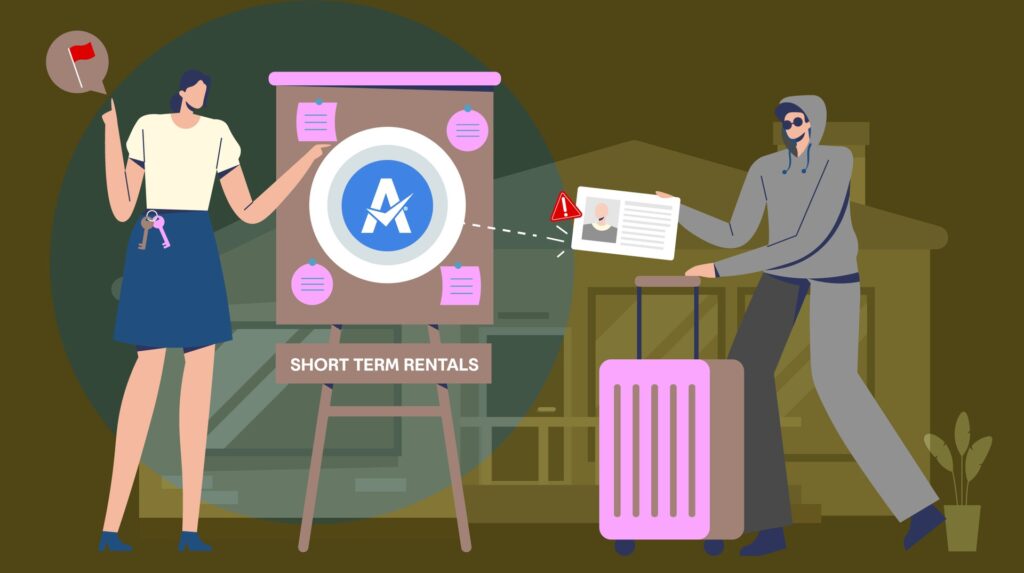
Reviews are among the most useful tools for learning how to verify vacation rentals before paying.
Do not look only at the overall star rating.
Read the actual reviews.
Look for specific comments about:
- Check-in
- Cleanliness
- Property accuracy
- Host communication
- Location
- Amenities
- Noise
- Parking
- Maintenance
- Overall experience
Detailed reviews are usually more useful than short comments such as “Great place!” or “Amazing!”
Look at Recent Reviews
A property can change over time.
The owner may change, the property may be renovated, or the management company may be replaced.
Recent reviews can help you understand the current experience.
Also check whether reviews are spread across a reasonable period rather than appearing all at once.
Be Careful With Review Patterns
A lack of reviews does not automatically mean that a property is fraudulent. A new legitimate listing may have no reviews.
However, you should be more cautious with an expensive booking when there is little independent information available.
Likewise, if reviews appear unusually repetitive, vague, or inconsistent with the property description, investigate further.
Verify the Host
The person offering the property is another important part of how to verify vacation rentals before paying.
Review the host profile if the platform provides one.
Look for:
- Host history
- Previous guest reviews
- Length of time on the platform
- Other properties
- Response information
- Verified information where available
A long history with consistent reviews can provide useful context.
But do not assume that a profile alone guarantees safety.
Scammers may impersonate legitimate hosts or compromise accounts.
That is why payment and communication practices still matter.
Ask Questions Before Booking
A good way to verify a vacation rental is to ask practical questions.
You could ask about:
- Exact sleeping arrangements
- Check-in procedure
- Parking
- Wi-Fi
- Kitchen facilities
- Accessibility
- Cleaning
- Nearby transportation
- House rules
- Additional fees
- Cancellation policy
Pay attention to the response.
A legitimate host should generally be able to answer reasonable questions about their property.
Be cautious if the person:
- Avoids basic questions
- Changes important details
- Gives contradictory information
- Becomes aggressive
- Pressures you to pay immediately
- Refuses to use the platform
- Insists on communicating through an unrelated channel
One unusual response does not necessarily prove a scam, but several warning signs together deserve attention.
Never Let a Cheap Price Rush You
An unusually low price is one of the most common warning signs when learning how to verify vacation rentals before paying.
Everyone loves a bargain.
That is exactly why scammers use attractive prices.
Imagine a luxury beachfront home that normally costs $500 per night being offered for $150 during the same peak travel dates.
There could be a legitimate explanation, but you should investigate before paying.
Compare the rental with similar properties.
Look at:
- Same destination
- Same travel dates
- Similar size
- Similar amenities
- Similar location
- Similar quality
If the price is dramatically lower, ask why.
Do not assume that you have discovered an incredible secret deal.
Calculate the Complete Price
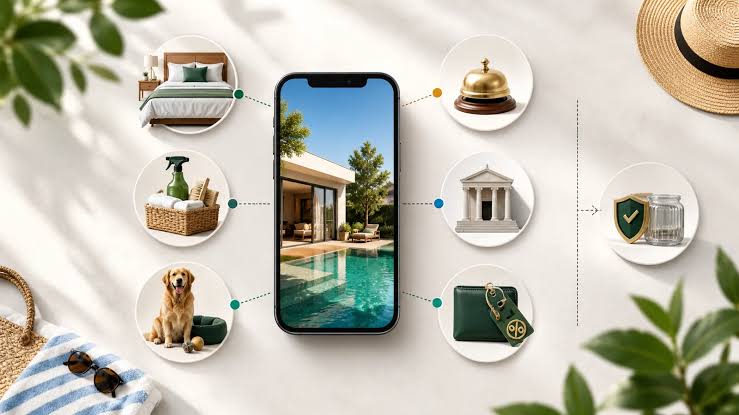
A rental advertised at a low nightly rate may have additional fees.
Before paying, identify:
- Nightly rate
- Cleaning fee
- Service fee
- Taxes
- Security deposit
- Pet fee
- Parking fee
- Resort fee
- Extra guest fee
- Other mandatory charges
Understanding the total cost is important for both budgeting and scam detection.
A legitimate booking should clearly explain applicable charges.
Be cautious if a person suddenly introduces a new fee that was not disclosed during the booking process.
Check the Cancellation Policy
A major part of how to verify vacation rentals before paying is understanding cancellation and refund terms.
Before payment, determine:
- Whether the booking is refundable
- Cancellation deadline
- Refund amount
- Host cancellation rules
- Security deposit conditions
- Change fees
- Additional penalties
Do not assume that “free cancellation” means you can cancel at any time.
There is usually a specific deadline.
Save a copy or screenshot of the policy that applies to your reservation.
This can be helpful if there is a dispute later.
Keep Communication on the Booking Platform
One of the most important safety practices is keeping communication within the official booking platform whenever possible.
Scammers may ask travelers to move conversations to:
- Telegram
- Personal email
- Text messages
- Social media
- Another website
They may claim that communication will be faster or easier elsewhere.
Moving communication outside the platform can make it harder to document what happened and may reduce available protections.
If a host asks you to move communication elsewhere, ask why.
If they also ask you to make payment outside the platform, treat that combination as a serious warning sign.
Never Pay Outside the Official Booking Process
This is one of the most important rules when learning how to verify vacation rentals before paying.
Be extremely cautious if a host asks you to pay directly through:
- Bank transfer
- Wire transfer
- Cryptocurrency
- Gift cards
- Cash
- Unfamiliar payment websites
- Personal payment accounts
The scammer may promise a discount for paying directly.
For example:
“The platform charges too many fees.”
“I can give you 20% off if you pay me directly.”
“This is faster than the normal checkout.”
These offers can sound attractive.
But saving money is not worth losing the entire payment.
Whenever possible, use the official payment system provided by the booking platform.
Verify Customer Service Information
Another important step is checking how to contact the platform if something goes wrong.
Be careful with phone numbers found through random Google results, social media, forums, or unfamiliar websites.
Scammers can create fake customer service numbers and pretend to represent travel companies.
If you need assistance, open the official booking platform directly and use its support section.
Do not assume that a phone number is legitimate simply because it appears in a search result.
Watch for Phishing Messages
A fake vacation rental scam may begin with an email or message.
The message could claim:
- Your payment failed.
- Your reservation needs verification.
- Your booking will be canceled.
- You need to confirm your identity.
- You must pay a security deposit.
- Your refund is ready.
The message may contain a link.
Before clicking, stop.
Open the official booking website or app independently and check your reservation.
Do not enter your password or payment information into a website simply because an email tells you to do so.
Check the Website Address Carefully
If you are booking directly through a property website, examine the domain carefully.
Scammers sometimes create websites that look almost identical to legitimate travel companies.
Look for:
- Misspelled company names
- Strange domain extensions
- Extra words in the domain
- Unusual characters
- Poor-quality design
- Broken links
- Missing contact information
- Suspicious payment pages
A professional design does not prove that a website is legitimate.
The website's identity and ownership should be independently verified.
Be Careful With Social Media Rentals
Social media has made it easy for property owners to advertise rentals directly.
It has also created opportunities for scammers.
You may see a beautiful property on:
- TikTok
- Marketplace platforms
- Online groups
The account may have attractive photographs and hundreds of followers.
That does not automatically prove that the rental is legitimate.
If you find a vacation rental through social media, perform additional verification before paying.
Check whether the property exists elsewhere and whether the person advertising it can be independently verified.
Verify the Owner or Property Manager
For direct bookings, verification becomes even more important.
Ask for:
- Full business name
- Property address
- Official website
- Rental agreement
- Contact information
- Cancellation policy
- Business registration details where appropriate
Then verify this information independently.
Do not rely solely on documents sent by the person who wants your money.
A scammer can create a convincing fake contract.
Ask for a Rental Agreement
For expensive direct bookings, a written rental agreement can provide useful information.
The agreement should clearly identify:
- Property
- Owner or management company
- Guest
- Dates
- Total price
- Deposit
- Payment schedule
- Cancellation terms
- House rules
- Responsibilities
- Refund conditions
Read the agreement before paying.
If important details are missing or the person refuses to provide basic documentation, reconsider the booking.
Be Careful With Security Deposits
Security deposits are common in some vacation rental arrangements, but you should verify the terms carefully.
Before paying a deposit, confirm:
- Amount
- Reason for deposit
- Where the deposit is held
- When it will be returned
- Conditions for deductions
- Payment method
- Documentation
A scammer may invent a security deposit after you have already paid the rental amount.
Do not send additional money simply because someone says the reservation will otherwise be canceled.
Verify the request independently.
Verify Check-In Instructions
Another useful step in how to verify vacation rentals before paying is understanding how check-in will work.
Ask:
- Will there be a key?
- Is there a lockbox?
- Is there a smart lock?
- Is someone meeting you?
- When will access instructions be provided?
- What happens if you arrive late?
If the host gives vague answers, ask for clarification.
You do not necessarily need the actual door code before booking, but you should understand the general process.
Research the Neighborhood
The property itself may be legitimate, but the surrounding location may not match your expectations.
Use maps and other reliable sources to research:
- Nearby attractions
- Public transportation
- Restaurants
- Grocery stores
- Hospitals
- Main roads
- Parking
- Neighborhood conditions
This is particularly important when traveling to an unfamiliar city.
A property advertised as “close to downtown” may actually require a long commute.
Check for Local Rental Rules
Some cities and destinations have specific rules governing short-term rentals.
A property may be subject to local registration, licensing, zoning, or other requirements.
Depending on the location, travelers may be able to find public information about registered vacation rentals or local regulations.
If you are booking directly, understanding the local rules can provide another layer of confidence.
However, local requirements vary considerably, so research the specific destination rather than assuming the same rules apply everywhere.
Trust Your Instincts

Sometimes the most useful part of how to verify vacation rentals before paying is simply recognizing when something feels wrong.
You may notice:
- The price seems unrealistic.
- The host is rushing you.
- The property information keeps changing.
- The payment instructions are unusual.
- The website looks suspicious.
- The photos appear elsewhere.
- The host refuses normal questions.
You do not need to prove that something is a scam before walking away.
If you cannot independently verify the booking, choose another property.
There are usually other vacation rentals available.
What to Do If You Already Paid and Suspect a Scam
If you have already paid and now believe that the rental may be fraudulent, act quickly.
First, stop sending additional money.
Then:
- Save all communication.
- Screenshot the listing.
- Save the booking confirmation.
- Record payment details.
- Contact the booking platform.
- Contact your bank or card issuer.
- Report suspicious transactions.
- Change passwords if account information was exposed.
- Monitor financial accounts.
- Be cautious of recovery scams.
Do not delete messages even if they are upsetting.
They may be important evidence.
What If the Host Asks for More Money?
This situation can occur after an initial payment.
A person may suddenly claim that you need to pay:
- Additional taxes
- Security deposit
- Cleaning charge
- Verification fee
- Damage deposit
- Cancellation fee
- Refund processing fee
Do not automatically pay.
Check the original booking terms.
If the charge was not part of the original agreement, contact the platform through its official support channel.
Do not use a phone number provided by the person requesting the money.
What If the Property Does Not Exist?
If you discover that the property does not exist after payment, contact your financial institution immediately.
Provide all available evidence.
Also report the listing to the booking platform.
If you are already at the destination, arrange safe temporary accommodation through a trusted source.
Do not continue sending money to the person who created the fraudulent listing.
If you believe you have been the victim of criminal fraud, contact the appropriate local authorities.
How to Verify Vacation Rentals Before Paying: Quick Checklist
Before paying for a vacation rental, ask yourself these questions:
Is the property listed on a legitimate platform?
Verify the website and app.
Does the property address exist?
Check it independently on a reliable map.
Do the photographs look genuine?
Look for inconsistencies and duplicate images.
Are there credible reviews?
Read detailed and recent reviews.
Does the host have a reasonable history?
Review the available host information.
Is the price realistic?
Compare similar properties.
Are all fees clearly explained?
Check the total price before paying.
Have I read the cancellation policy?
Understand refund and cancellation conditions.
Am I being asked to pay outside the platform?
If yes, stop and investigate.
Am I being pressured to pay immediately?
Urgency is a warning sign.
Can I verify the contact information independently?
Do not trust phone numbers or links provided by unknown sources.
Have I saved my booking documents?
Keep confirmations, receipts, and messages.
If you cannot confidently answer these questions, take more time before paying.
Common Mistakes Travelers Make
Even careful travelers can make mistakes when booking vacation rentals.
One common mistake is focusing too much on photographs.
Another is assuming that a low price automatically means a great deal.
Some travelers also skip the cancellation policy because they assume they will not need it.
Others make payments through a private bank account because the host promises a discount.
Another common mistake is searching Google for customer service and calling the first phone number that appears.
The safest approach is to slow down.
When money is involved, convenience should never be more important than verification.
Must Read:
- Vrbo vs Airbnb Safety Guide: Which Is Safer for Your Next Stay?
- Is Vrbo Safe in USA? Full Safety Guide 2026
- Lost Money on a Rental Booking? Do This Immediately
Final Thoughts:
Learning how to verify vacation rentals before paying is one of the most useful skills for modern travelers. Vacation rental scams can look convincing because scammers may copy photographs, descriptions, logos, and even customer service information from legitimate companies.
The safest strategy is to verify several pieces of information rather than relying on one sign.
Check the booking platform. Verify the property address. Research the property independently. Compare prices. Read reviews. Check the host. Understand cancellation policies. Review all fees. Keep communication within the platform and use the official payment process.
Be particularly cautious if someone asks you to pay outside the platform, promises an unusually large discount, pressures you to make an immediate payment, or sends suspicious links.
If something feels wrong, stop.
You do not have to complete a booking simply because you have already spent time researching it. Walking away from a questionable rental is much easier than trying to recover money after a scam.
The best vacation rental booking is not necessarily the cheapest or most attractive listing. It is the one you can verify with reasonable confidence.
By following these steps, you can make smarter booking decisions, reduce the risk of rental scams, and focus on enjoying your trip instead of worrying about whether your accommodation is legitimate.