Booking a flight, hotel, train ticket, vacation rental, or holiday package online is now easier than ever. In just a few clicks, travelers can compare prices, choose dates, make payments, and receive booking confirmations. But this convenience has also created new opportunities for scammers.
One growing problem is fake customer care numbers for travel booking, where scammers create or promote fake phone numbers that appear to belong to airlines, hotels, travel agencies, cruise companies, booking websites, or other travel businesses. Travelers searching on Google may see a phone number that looks official, call it for help, and unknowingly connect with a scammer.
This type of Google travel booking scam can be particularly dangerous because the traveler often contacts the fake number while trying to solve a genuine problem. They may need to change a flight, request a refund, confirm a hotel reservation, cancel a ticket, or ask about baggage. Because they are already expecting to speak with customer service, they may trust the person who answers.
The scammer can then ask for booking details, card information, passwords, verification codes, or additional payments. In some cases, the scammer may even claim that the original booking has a problem and that an immediate payment is required.
Google has warned about customer-support impersonation scams, including fake websites and phone numbers designed to impersonate legitimate businesses. The FTC has also warned travelers that scammers can place numbers alongside well-known travel companies in online search results and use fake websites that look legitimate.
Understanding how these scams work can help you avoid becoming a victim.
What Is a Fake Travel Customer Care Number Scam?
A fake travel customer care number scam happens when someone creates, publishes, advertises, or distributes a phone number that falsely claims to belong to a legitimate travel company.
The scammer may pretend to represent:
- An airline
- Hotel
- Travel booking website
- Vacation rental company
- Cruise company
- Train operator
- Bus company
- Travel agency
- Airport service
- Visa or travel documentation service
The fake number may appear in a Google search, online advertisement, social media post, forum, fake website, business listing, or other online location.
The traveler sees the number, assumes it is official, and calls.
The person answering the phone then pretends to be a customer service representative.
From there, the scam can take different forms.
The scammer might claim that your booking has been canceled, your payment failed, your ticket needs to be reissued, or your reservation requires additional verification.
The goal is usually to obtain money or sensitive information.
How the Google Travel Booking Scam Works
The scam often begins with a simple Google search.
Imagine you have booked a flight and suddenly need to change the date.
You search:
“Airline customer care number”
or:
“Hotel booking customer service”
or:
“Travel website refund phone number”
You may see several results.
A scammer may have manipulated search visibility, created a fake website, purchased advertising, created misleading content, or used other tactics to make a fraudulent number appear credible.
Google itself has acknowledged that customer support scams can involve fake customer service websites and phone numbers that impersonate legitimate businesses.
The traveler calls the number without realizing that it is controlled by a scammer.
The scammer then uses the information provided during the call to make the conversation sound legitimate.
For example, they may ask:
“Can you provide your booking reference?”
“Can you confirm the name on the reservation?”
“What is your travel date?”
These questions can seem completely normal.
Once trust has been established, the scammer may move toward the actual fraud.
Why These Scams Are So Effective
The biggest reason fake customer care numbers for travel booking work is that travelers often call when they are already worried.
Maybe their flight was canceled.
Maybe their hotel reservation is missing.
Maybe they need a refund.
Maybe they are standing at an airport and need urgent assistance.
Scammers understand this emotional pressure.
Google's guidance on customer-support impersonation scams specifically advises people to slow down, verify information, and avoid sending money or personal information simply because someone demands it immediately.
A scammer may deliberately create a sense of urgency.
They might say:
“Your ticket will be canceled if you don't pay now.”
“Your reservation is at risk.”
“You need to verify your card immediately.”
“Your refund cannot be processed unless you pay a small fee.”
“You have to transfer the money before we can rebook your flight.”
The traveler may panic and follow the instructions.
That is exactly what the scammer wants.
Fake Numbers Can Look Completely Real
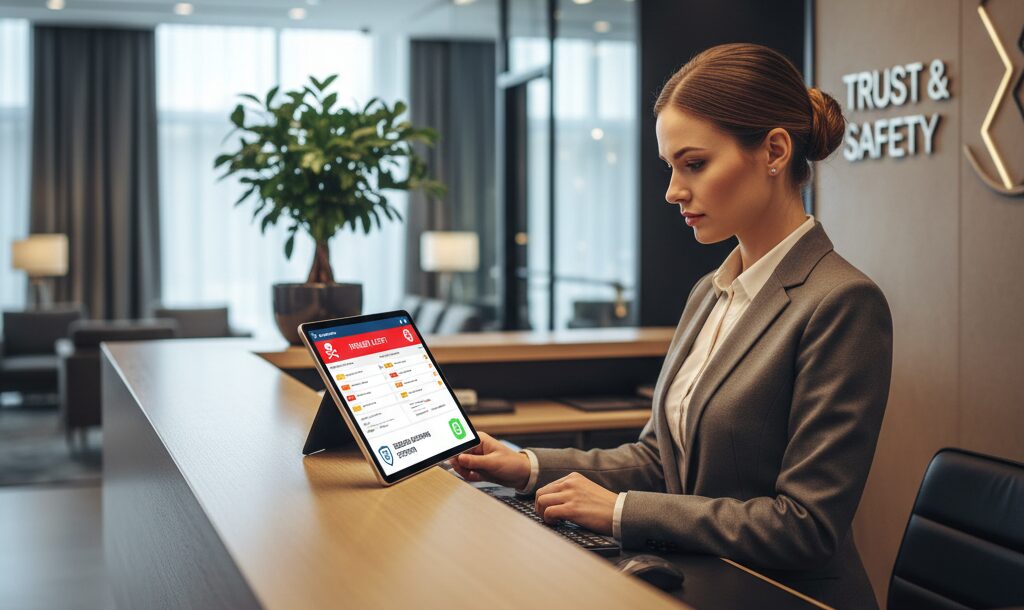
One reason people fall for a Google travel scam is that the phone number may look professional.
It may have the correct country code.
It may appear next to the company's name.
It may even appear in a sponsored advertisement or on a website using the company's logo.
But appearance does not prove authenticity.
A phone number displayed prominently in search results is not automatically an official customer service number.
The FTC has warned that scammers can put fake numbers alongside well-known company names in online searches. It recommends checking the company's official website or using contact information you already know is genuine.
Fake Travel Websites Are Part of the Problem
Sometimes the scam does not start with a phone number.
It starts with a fake website.
The website may copy the branding, colors, logos, layout, and language of a legitimate airline, hotel, or travel company.
It may even contain a “Contact Us” page with a phone number.
You call the number because the website looks legitimate.
But the entire website was created by the scammer.
Google has also warned about fake travel websites that imitate established brands or advertise unusually attractive travel deals.
The FTC similarly warns consumers about fake travel websites and recommends checking the real company's website directly instead of clicking unexpected links from emails or messages.
This is why checking the source of a phone number is more important than simply checking whether the website looks professional.
A Common Airline Customer Care Scam
Airline customer service is a popular target because travelers frequently need help with reservations.
Suppose your flight is delayed or canceled.
You search Google for the airline's customer care number.
You find a number and call.
The person answering claims to be an airline representative.
They ask for your booking reference and passenger information. Then they tell you that they can rebook the flight.
After a few minutes, they request payment.
They might claim the payment is for:
- Rebooking
- Ticket modification
- Cancellation
- Seat confirmation
- Refund processing
- Emergency reservation
- Administrative fees
The traveler provides card details or transfers money.
Later, they discover that the person was not an airline representative.
The FTC has previously warned about scammers impersonating airline customer service representatives, including scams that target travelers who are publicly asking for help after delays or cancellations.
Hotel Customer Care Number Scams
Hotels can also be targeted.
A traveler may search for:
“Hotel customer service number”
or:
“Hotel reservation phone number”
A fake number appears.
The scammer answers and asks for the reservation number.
Then comes the problem.
The scammer may claim:
“Your reservation payment did not go through.”
“Your booking requires verification.”
“Your room is no longer available.”
“Your reservation needs to be reconfirmed.”
They may ask the traveler to provide credit card information or make another payment.
This is especially dangerous because the scammer may already know basic information about the hotel and reservation from publicly available information or information provided by the traveler.
Fake Travel Agency Customer Support
Fake travel agencies can also use customer care numbers to appear legitimate.
The website may advertise cheap flights, holiday packages, hotel deals, or international travel services.
A traveler makes a booking or calls for assistance.
The person answering may claim to be a travel consultant.
They could request payment through methods that are difficult to reverse or recover.
The FTC warns that travel scammers often prefer payment methods such as wire transfers, gift cards, cryptocurrency, or certain payment apps because recovering money after payment can be difficult.
If a supposed travel company insists that you must use an unusual payment method, stop and verify the company independently.
Warning Signs of a Fake Customer Care Number

There are several warning signs that can help you identify a fake travel customer care number.
The Number Comes From an Unofficial Website
If you found the number on a random website, forum, social media post, or questionable directory, do not assume it is official.
Find the company's website independently and check the contact information there.
The Representative Creates Urgency
Be careful if the person insists that you must make a payment immediately.
Urgency is a common feature of impersonation scams.
Google's customer-support scam guidance recommends slowing down rather than allowing a caller to pressure you into an immediate decision.
They Ask for Sensitive Information
A suspicious caller may ask for:
- Credit card number
- CVV
- Password
- One-time password
- Verification code
- Banking credentials
- Account recovery information
Never provide sensitive information simply because someone claims to represent a travel company.
They Ask You to Install Software
Be extremely cautious if a supposed customer service representative asks you to install remote-access software or give them control of your computer or phone.
That request can create serious security risks.
They Ask for Unusual Payment Methods
A demand for cryptocurrency, gift cards, wire transfers, or unusual payment methods should be treated as a major warning sign.
The FTC specifically warns travelers about these payment methods in travel scams.
They Refuse to Let You Verify Them
A genuine customer service representative should not object when you say you want to hang up and call the official number yourself.
A scammer may instead pressure you to stay on the phone.
That is a strong reason to end the conversation.
Never Trust Caller ID Alone
Caller ID is not proof that a call is genuine.
The FTC explains that scammers can use spoofing to make a different name or number appear on caller ID.
That means a call may appear to come from a familiar company even when it does not.
The same principle applies to phone numbers found online.
A professional-looking number can still be fraudulent.
Always verify the number independently.
How to Find the Real Travel Customer Care Number
The safest method is to start with the official company website or official app.
Do not search randomly and select the first number you see.
Instead:
- Open your browser.
- Type the official website address yourself when you know it.
- Navigate to the company's Help, Support, or Contact section.
- Find the official customer service number.
- Compare the number with the number you originally found.
- Use the official contact method.
The FTC recommends going directly to the company's website instead of relying on unexpected links or questionable search results.
If you already have a booking confirmation, check whether the confirmation contains official customer service information.
What If the Number Appears in a Google Ad?
A common misconception is that a number must be legitimate because it appears in a paid search advertisement.
That is not a safe assumption.
Scammers can use online advertising and search visibility to reach people looking for customer support. The FTC specifically warns that scammers may place fake numbers alongside well-known company names in search results.
Treat sponsored results carefully.
Instead of relying on the advertisement, navigate directly to the official travel company's website.
What If Google Shows the Number in Search Results?
The same principle applies.
Search results are useful, but the presence of a phone number in Google does not automatically establish that the number belongs to the company.
Google has published guidance about customer-support impersonation scams involving fake phone numbers and websites.
If the number matters because money or sensitive information is involved, independently verify it through the company's official website or app.
What to Do If You Already Called a Fake Number
If you realize that you contacted a fake travel customer care number, do not panic.
Your next steps depend on what information you shared and whether you sent money.
If You Only Made the Call
If you did not share sensitive information or make a payment, end communication with the suspected scammer.
Do not continue the conversation.
Find the official company contact information independently and contact the real customer service team if you still need assistance.
If You Shared Your Card Details
Contact your card issuer or bank immediately.
Explain that you may have provided your payment information to a fraudulent customer service representative.
Ask what steps are available to protect the account and dispute unauthorized transactions.
Monitor your account for unfamiliar charges.
If You Shared a Password
Change the password immediately.
If you used the same password on other websites, change it there too.
Enable two-factor authentication where available.
If You Shared an OTP or Verification Code
Treat the situation as urgent.
Contact the relevant financial institution or service provider through an official channel.
Explain exactly what happened.
Never assume that a verification code is harmless simply because it is only valid for a short period.
If You Sent Money
Contact the bank, card issuer, payment service, or transfer company immediately.
Ask whether the transaction can be stopped, reversed, or disputed.
Recovery is not guaranteed, but reporting quickly may improve your options.
What to Do If You Have Been Scammed in India
Online travel scams are also a concern for Indian travelers.
India's Indian Cyber Crime Coordination Centre has warned about online booking scams involving fake websites, social media pages, WhatsApp accounts, and paid search advertisements. Its April 2025 alert specifically mentioned fraudulent booking services targeting tourists and pilgrims, including hotel, taxi, holiday, and helicopter booking scams.
If you are in India and have lost money through an online scam, report the incident promptly through the appropriate Indian cybercrime reporting channels and contact your bank or payment provider.
If the transaction involved UPI, contact your bank or payment service as quickly as possible.
Keep screenshots, transaction IDs, phone numbers, URLs, emails, messages, and other evidence.
The faster you document what happened, the easier it may be to explain the incident when reporting it.
How to Prevent Fake Travel Customer Care Scams
Prevention is much easier than recovering money after a scam.
The most important rule is simple:
Do not trust a customer care number just because Google shows it.
Verify the number through the official travel company's website or app.
You should also:
- Avoid unexpected customer service links
- Do not share passwords
- Never share one-time verification codes
- Be cautious with card information
- Avoid unusual payment methods
- Do not install remote-access software at a caller's request
- Ignore pressure to pay immediately
- Verify booking information independently
- Keep your booking confirmation
- Use official apps when available
- Check the website URL carefully
- Research unfamiliar travel companies
These simple habits can dramatically reduce your exposure to Google travel scams.
Why Searching Directly Is Safer

Suppose you need help with an airline reservation.
Instead of searching:
“Airline customer care number”
and clicking the first result, type the airline's official website address directly into your browser if you know it.
Then find the support section.
This approach reduces the chance that you will accidentally call a number published on a fake website.
The FTC specifically recommends typing the company's website directly into the browser when possible rather than clicking links in unexpected emails or messages.
Be Careful With Social Media Customer Support
Social media can also be used in travel customer service scams.
Imagine you post publicly:
“My flight was canceled. Can someone help?”
A fake account may reply:
“Please DM us your booking reference.”
The account may use the airline's logo and a similar username.
The scammer then asks for personal or payment information.
The FTC has warned about scammers impersonating airline customer service representatives on social media and targeting travelers who publicly ask for assistance.
If you need customer support through social media, verify that the account is the company's official account before sharing anything.
Do Not Let a Travel Emergency Make You Rush
Travel problems naturally create stress.
When your flight is canceled or your hotel booking disappears, you want an immediate solution.
That is exactly when scammers can take advantage.
Before sending money or information, stop for a moment.
Ask:
Did I contact the company through an official channel?
Is this phone number verified?
Can I find the same number on the company's official website?
Is the person asking for information that they genuinely need?
Why am I being pressured to act immediately?
Taking a few minutes to verify the information can prevent a much bigger problem.
Must Read:
- I Got Scammed on Vrbo: Here’s What Happened
- Top 5 Travel Booking Mistakes That Can Ruin Your Trip
- Is Panama City Beach Rentals Safe? What Tourists Need to Know First
Final Thoughts:
Fake customer care numbers for travel booking are a serious online scam because they target travelers at the exact moment they need help.
A fake number can appear in Google search results, advertisements, websites, social media, or online directories. The person answering may sound professional and may even know basic information about the travel company.
But that does not mean they are genuine.
The safest approach is to verify customer service information through the official travel company's website or app. Do not rely solely on Google search results, advertisements, caller ID, or a phone number provided by an unknown person.
Be especially cautious when someone asks for sensitive information, requests unusual payment methods, pressures you to act immediately, or asks you to install software.
If you have already shared financial information or sent money to a scammer, contact your bank or payment provider immediately and preserve all available evidence. In India, travelers affected by online booking fraud should also report the incident through appropriate cybercrime channels. India's I4C has specifically warned about fake travel booking websites and paid search advertisements used in online booking fraud.
The most important lesson is simple: when you need travel customer support, find the company first, then find its phone number. Do not find a phone number first and assume the company behind it is real.
A few seconds of verification can protect your money, personal information, and entire travel plan from a potentially expensive Google travel booking scam.