Booking a vacation rental can make a trip more comfortable, private, and affordable, but Vrbo scams can turn an exciting holiday into a stressful experience. Travelers often use vacation rental platforms because they want more space, better amenities, and a home-like experience. Most bookings can be perfectly legitimate, but scammers may try to take advantage of travelers through fake listings, suspicious payment requests, misleading property information, or communication designed to move the conversation away from the platform.
If you have ever searched for a vacation home and thought, “This place looks too good to be true,” you are not alone. A beautiful property at an unusually low price can be tempting, especially when you are trying to stay within a travel budget. The problem is that scammers know exactly how to make a fake rental look convincing.
This guide explains what can happen when a traveler encounters a Vrbo scam, the warning signs to watch for, what to do if you think you have been scammed, and how to protect yourself when booking a vacation rental.
How the Vrbo Scam Started?
My experience with a potential Vrbo scam started like many normal vacation bookings. I was looking for accommodation that offered a good combination of location, price, and amenities. After comparing several properties, I found a listing that appeared to match almost everything I wanted.
The property photographs looked professional. The description was detailed, the location seemed convenient, and the price was attractive compared with similar rentals in the area.
At first, there was nothing obviously suspicious.
The listing appeared to have the information travelers normally look for, including photographs, property details, available amenities, and booking information. That made it easy to assume that everything was legitimate.
The first warning sign came when communication around the reservation started to feel different from what I expected.
Instead of keeping everything straightforward through the normal booking process, there were requests and instructions that made me stop and question whether the reservation was safe.
That was the moment when the situation changed from an ordinary vacation rental search into something that looked like a potential Vrbo scam.
The First Red Flag I Noticed
One of the biggest lessons from any Vrbo scam experience is that scammers often do not start with an obvious request for money.
They may first establish trust.
A suspicious property can appear legitimate, the communication can sound professional, and the person on the other side may answer questions quickly. This can make travelers feel comfortable before the actual scam attempt begins.
In my situation, the first major red flag was related to how the payment or communication process was being handled.
Whenever a person connected with a vacation rental asks you to ignore the normal booking process, you should stop and investigate.
A legitimate-looking conversation does not automatically mean that the person or listing is legitimate.
Why Moving Communication Off the Platform Can Be Risky
One common warning sign associated with vacation rental scams is a request to communicate or pay outside the platform.
A person may claim that paying directly will:
- Save you money
- Avoid platform fees
- Make the booking faster
- Provide a special discount
- Secure the property immediately
- Make the transaction easier
These explanations can sound reasonable, particularly when the traveler believes they are receiving a better deal.
However, moving a transaction outside the platform can reduce the protections available through the platform's normal booking process.
This is why travelers should be extremely cautious when someone pressures them to use an unusual payment method or continue the transaction elsewhere.
The Listing Looked Too Good to Be True
Another important lesson from my Vrbo scam experience was the price.
The rental was attractive, well presented, and appeared to offer excellent value.
That combination is exactly what makes fraudulent listings dangerous.
Scammers understand that travelers compare properties based heavily on price. A rental that looks significantly better than competing properties can receive attention quickly.
A suspiciously low price does not automatically prove that a listing is fraudulent. Owners may offer discounts because of seasonality, cancellations, new listings, or other legitimate reasons.
However, a large price difference should encourage you to investigate further.
Compare Similar Properties
When evaluating a vacation rental, compare it with several similar properties in the same area.
Look at:
- Location
- Property size
- Number of bedrooms
- Amenities
- Guest capacity
- Reviews
- Dates
- Seasonal pricing
- Cancellation terms
If similar properties cost significantly more while one listing offers a dramatically lower rate, ask yourself why.
The answer may be completely legitimate, but it is worth investigating before making a payment.
Fake or Misleading Property Photos
Photos are one of the most powerful tools used to attract vacation rental customers.
A beautiful living room, swimming pool, modern kitchen, large bedroom, or ocean view can make travelers want to book immediately.
But photographs alone do not prove that the property exists or that the images accurately represent the rental.
Some scammers may use photographs taken from other legitimate listings or websites.
That means travelers should not rely only on attractive images when evaluating a potential Vrbo scam.
Look for Consistency
Compare the photographs with the written description.
For example, if the description says the property has three bedrooms but the photographs appear to show only two, investigate further.
Also look for inconsistencies involving:
- Property size
- Number of bathrooms
- Outdoor areas
- Furniture
- Amenities
- Building style
- Location
- Views
If the listing description and photographs do not appear to match, consider it a warning sign.
The Pressure to Book Quickly
Another tactic that can appear in a Vrbo scam is urgency.
You may be told:
“This property has another person interested.”
“Someone else is about to book it.”
“You need to pay today.”
“The special price expires tonight.”
Urgency can cause travelers to stop thinking critically.
The goal of pressure is often to make you act before you have enough time to verify the details.
Never Let Urgency Replace Research
Even if a property looks perfect, take time to check the important information.
Verify the listing, read reviews, examine the booking terms, and keep communication within the platform where possible.
If someone becomes aggressive or repeatedly pressures you to make an immediate payment, that behavior should increase your caution rather than encourage you to book faster.
A genuine vacation opportunity is rarely worth risking your travel budget.
Why Travelers Fall for Rental Scams
Understanding why Vrbo scams work can help travelers avoid them.
Most people do not fall for scams because they are careless. They fall for them because scammers create situations that appear normal.
Travelers may be:
- Excited about an upcoming trip
- Trying to find a good deal
- Booking during a busy travel period
- Worried about losing a property
- Unfamiliar with the destination
- In a hurry
- Focused on staying within a budget
Scammers use these emotions and circumstances to create pressure.
A traveler who normally researches every purchase may make a quick decision when they believe a beautiful vacation property is about to disappear.
That is why slowing down is one of the most effective ways to protect yourself.
What Happened When I Questioned the Booking
Once I noticed several warning signs, I became much more cautious.
Instead of continuing with the payment or following instructions immediately, I started checking the details more carefully.
This is an important step for anyone who suspects a Vrbo scam.
Do not confront the person aggressively. Do not send additional money just because they say the payment is urgent. Instead, collect the information you already have and verify it.
Look at the property details, communication history, booking information, and payment instructions.
The more inconsistencies you find, the more cautious you should become.
What to Do If You Think You Have Been Scammed
If you believe you have encountered a Vrbo scam, your next steps depend on what has happened.
If you have not sent money yet, stop the transaction and avoid sharing additional financial information.
If you have already made a payment, act quickly.
Contact the Platform
Use the official Vrbo website or app to report the suspicious listing, message, or transaction.
Do not use contact details supplied by the suspicious person if you are unsure whether they are genuine.
Using official channels helps ensure that your complaint reaches the correct company.
Contact Your Bank or Payment Provider
If you have already sent money or provided payment information, contact your bank, card issuer, or payment provider as soon as possible.
Explain that you believe the transaction may be fraudulent and ask what options are available.
The sooner you report a suspicious transaction, the better.
However, do not assume that a bank or payment provider can always recover your money. Recovery depends on factors such as the payment method, timing, transaction type, and circumstances.
Change Compromised Passwords
If you shared login information or believe your account may have been compromised, change your password immediately.
Use a strong, unique password and enable two-factor authentication where available.
Do not reuse the same password across multiple accounts.
Preserve Evidence
Save relevant information, including:
- Booking confirmations
- Messages
- Emails
- Payment receipts
- Screenshots
- Property photographs
- Listing details
- Payment instructions
- Names or contact information
- Transaction dates
This evidence may help when reporting the incident to the platform, payment provider, or appropriate authorities.
Common Vrbo Scam Warning Signs
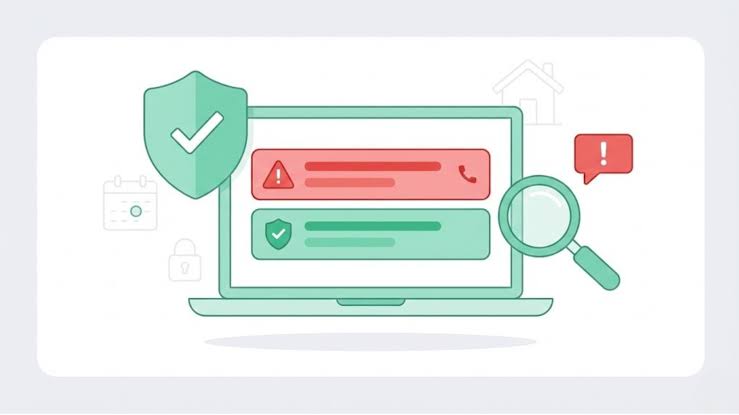
There is no single sign that proves a listing is fraudulent, but several warning signs together should make you cautious.
The Price Is Far Below Similar Rentals
An unusually low price can be a warning sign, particularly when the property appears significantly better than competing listings.
You Are Asked to Pay Outside the Platform
Requests for bank transfers, gift cards, cryptocurrency, cash, or other unusual payment methods should receive careful scrutiny.
The Person Wants to Move Communication Elsewhere
Be cautious if someone insists on communicating through personal email, messaging apps, or other channels instead of the platform's normal communication system.
There Is Extreme Pressure to Pay
Urgency can be used to prevent travelers from investigating the property.
The Property Information Is Inconsistent
If photographs, descriptions, addresses, amenities, or other details do not match, stop and investigate.
Reviews Look Suspicious
Reviews that are extremely repetitive, vague, or inconsistent may deserve additional scrutiny.
Reviews should be considered alongside other information rather than treated as absolute proof of legitimacy.
The Person Avoids Basic Questions
A legitimate property manager or owner should generally be able to provide reasonable information about the property.
If basic questions are repeatedly avoided, consider it a warning sign.
How to Verify a Vacation Rental Before Booking
Preventing a Vrbo scam is easier than recovering money after a fraudulent transaction.
Before booking, take a few simple precautions.
Research the Property Location
Check the property's location carefully.
Use maps and other reliable sources to confirm that the address, neighborhood, and nearby landmarks make sense.
If the listing claims to be walking distance from a famous attraction, verify the distance yourself.
Compare Prices
Search for similar properties in the same area and for the same dates.
A lower price is not automatically suspicious, but an extreme difference should make you ask questions.
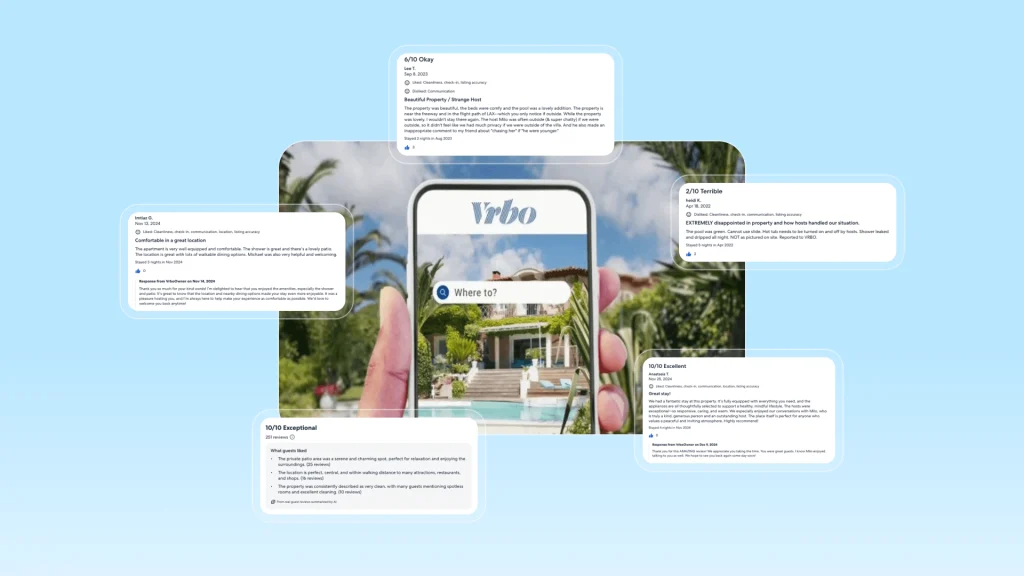
Read Reviews
Read multiple reviews rather than looking only at the overall rating.
Pay attention to comments about:
- Check-in
- Property condition
- Communication
- Cleanliness
- Location
- Accuracy of the listing
- Host responsiveness
Recent reviews can be particularly useful.
Keep Communication on the Platform
Whenever possible, use the platform's official communication system.
Keeping important conversations within the booking platform can make it easier to document what happened if there is a dispute.
Understand the Payment Process
Before making payment, understand:
- What you are paying
- When you are paying
- What fees are included
- Cancellation terms
- Refund conditions
- Security deposits
- Additional charges
Do not make a payment simply because someone says you must do so immediately.
What I Would Do Differently Next Time
The biggest lesson from a Vrbo scam experience is that a good-looking listing is not enough.
If I were booking another vacation rental, I would spend more time comparing the property with similar listings.
I would also pay much closer attention to communication and payment instructions.
A good travel booking process should feel straightforward. If something feels unusually complicated, secretive, rushed, or different from the normal process, I would stop before sending money.
I would also save all booking information from the beginning rather than waiting until something goes wrong.
Having screenshots and confirmation details can make reporting a problem much easier.
Is Vrbo Safe to Use?
The existence of Vrbo scams does not mean that every property on the platform is fraudulent.
Large travel marketplaces can contain legitimate properties while also being targeted by people attempting to scam travelers. The important point is to understand how scams can happen and recognize suspicious behavior.
Travelers should use the platform's normal booking and payment processes and carefully review property information before making reservations.
It is also important to understand the terms and protections associated with your specific booking.
No online marketplace should be treated as a substitute for basic travel research.
How to Protect Yourself From Future Travel Rental Scams
A simple checklist can help reduce your risk.
Before making a vacation rental booking, ask yourself:
Does the price make sense?
Compare similar properties before deciding.
Does the property information appear consistent?
Check photographs, descriptions, location, and amenities.
Are there credible reviews?
Read multiple reviews and look for specific details about previous stays.
Am I being pressured?
If someone is creating unnecessary urgency, slow down.
Am I being asked to pay differently from the normal process?
Treat unusual payment requests as a major warning sign.
Have I read the cancellation policy?
Make sure you understand when you can cancel and whether you will receive a refund.
Have I saved the booking information?
Keep confirmations and important communications.
Do I know who to contact if something goes wrong?
Know how to reach the platform, your payment provider, and other relevant organizations.
This checklist takes only a few minutes but can prevent a potentially expensive Vrbo scam.
What to Do If You Arrive and the Property Does Not Exist
One of the most frightening vacation rental scenarios is arriving at your destination and discovering that the property is not available or does not match the listing.
If this happens, prioritize your immediate safety and accommodation needs.
Do not enter a property if you are unsure that you have the right to be there.
Find safe temporary accommodation if necessary and contact the platform through its official support channels.
Document the situation with photographs and screenshots when appropriate.
If you believe money has been stolen or you are dealing with criminal activity, contact the appropriate local authorities.
Also contact your payment provider quickly if money has already been transferred.
Do not continue sending money to a person who claims that another payment is required to “unlock” your reservation, release a deposit, or solve the problem unless you have independently verified the request.
The Biggest Lesson From My Vrbo Scam Experience
The biggest lesson is simple: do not let a great deal make you ignore warning signs.
When you are excited about a vacation, it is easy to focus on the beautiful property, excellent location, low price, and exciting travel plans.
Scammers understand this.
They create listings and conversations that encourage travelers to make emotional decisions.
The best defense is to slow down.
Compare prices. Read reviews. Check the property information. Understand the cancellation policy. Keep communication on the platform. Be careful with payment requests. Never allow someone else's urgency to become your emergency.
If something does not feel right, you do not have to complete the booking.
It is better to lose a questionable deal than to lose your travel money.
Must Read:
- Top 5 Travel Booking Mistakes That Can Ruin Your Trip
- Is Panama City Beach Rentals Safe? What Tourists Need to Know First
- WhatsApp Booking Scam: Fake Hotel and Travel Bookings
Final Thoughts:
A Vrbo scam can be a frustrating and stressful experience, particularly when you are planning what should be an enjoyable vacation. The most important thing is to recognize that scammers can make fraudulent listings appear convincing.
A professional-looking property, attractive photographs, a detailed description, and a good price are not enough to prove that a vacation rental is legitimate.
Before booking, compare similar properties, investigate unusual price differences, read reviews carefully, verify the location, understand cancellation policies, and keep communication and payment within the platform's normal process whenever possible.
If you suspect that something is wrong, stop before sending additional money. Contact the platform through its official channels, notify your bank or payment provider if necessary, secure any compromised accounts, and preserve evidence.
The best way to deal with a Vrbo scam is to prevent it before it happens. Take your time, trust warning signs, and never let pressure force you into a decision.
Your vacation should be about exploring a new destination, relaxing, and creating great memories. A few careful checks before booking can help keep your travel plans focused on exactly that.